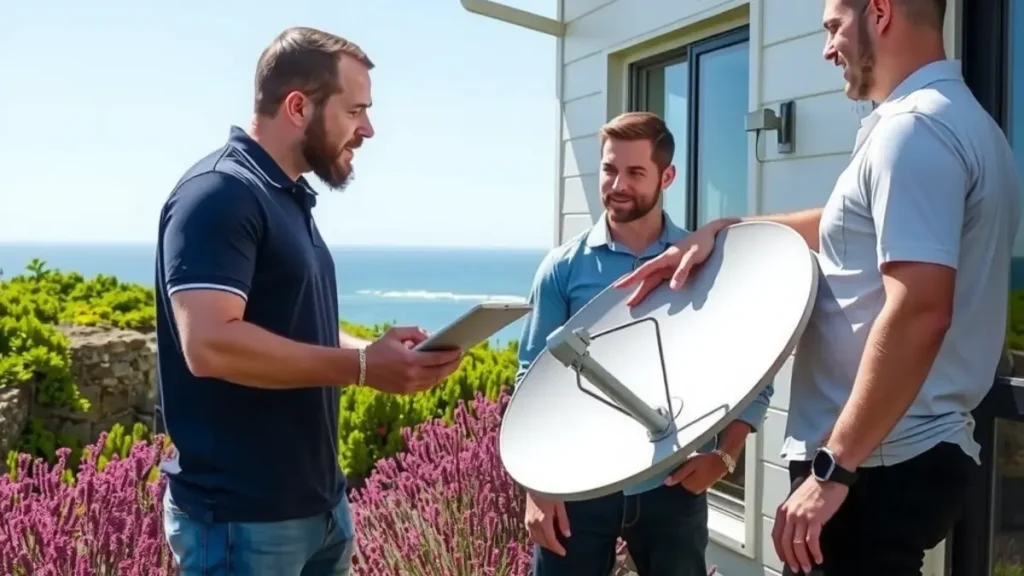
Choosing a DStv installer in Langebaan is less about finding the loudest advert and more about checking how the person approaches your property. A competent installer should ask useful questions, define the scope, select a sensible mounting position and test the finished system. The answers matter even more in exposed parts of town where strong summer wind, salt air and blown sand punish weak fittings.
The same checklist works for a permanent home, a Myburgh Park holiday property or guest accommodation near Club Mykonos. It also helps owners in Saldanha, Vredenburg and Paternoster decide whether an installer understands the travel, access and operating needs of a West Coast property.
Look for diagnosis before replacement
A useful installer does not treat every no-signal report as a reason to sell a complete new system. The fault could sit at the dish, LNB, connector, cable, decoder or account. For DStv signal repairs, ask how the technician will isolate the cause and what measurements will be taken. A clear diagnosis protects you from replacing serviceable parts while leaving the original fault untouched.
Describe when the problem occurs. Wind-related interruptions point the investigation in a different direction from a decoder that fails after every power cut. Note affected channels, error messages and whether all viewing points lose signal together. An installer who listens to that pattern can arrive with a better plan than one who hears only the words 'DStv is broken'.
Check local installation choices
Langebaan is not a sheltered inland environment. Mounting hardware near the lagoon can be exposed to salt, and strong wind from October to March can reveal movement in a weak bracket. Blown sand can collect around exposed equipment. Ask where the installer proposes to mount the dish, how the cable will be supported and how outdoor connectors will be protected. The answer should relate to your building rather than repeat a generic promise.
A technician should balance signal visibility, access, safety and weather exposure. The highest point is not automatically the best point. A lower, stable position may be preferable if it has a clear line of sight and allows safe maintenance. If the installer cannot explain the chosen location in plain language, ask for an alternative before drilling begins.
Expect proper testing
A picture on the television proves only that the system works at that moment. Completion should include signal readings, checks on the bracket and connectors, decoder operation and testing at each agreed viewing point. After dish alignment, the technician should confirm that the mount remains secure and that the cable has not been strained or left loose in the wind.
If internet-connected decoder functions are part of the brief, test those functions while the installer is present. The satellite signal and home network are separate systems, so a perfect dish reading will not repair weak WiFi. Where connectivity is poor, a dedicated home WiFi network assessment may be more appropriate than repeated decoder resets.
Ask for a written scope
The quote should identify the job, main parts, number of rooms and any exclusions. It should say whether access equipment, cable concealment, account assistance and removal of old hardware are included. For a move, use the relocation service as the scope rather than assuming the old dish can simply be installed in the same way at the new address.
Written scope protects both customer and installer. If hidden cable damage or unsafe access changes the job, the technician can explain the difference and request approval. Without a defined starting point, it is difficult to know whether a variation is reasonable or whether the original quotation omitted an obvious requirement.
Match the installer to the property
A single lounge in a family home is different from ten rooms in a guesthouse or a shared distribution system in a complex. Commercial and accommodation properties need planned cable routes, labelled equipment and a clear handover. For those jobs, review commercial DStv installation before appointing someone whose experience may be limited to one television and one decoder.
Shared systems require another level of care because a change can affect multiple residents. Body corporate approval, access to common areas and coordination with occupants may be necessary. The communal DStv service is the right reference point for complexes and shared buildings. Do not allow an unplanned alteration to common infrastructure for the sake of one unit.
Communication matters for holiday homes
Many Langebaan owners are not at the property when work takes place. Agree in advance who will provide access, receive the diagnosis and approve extra work. Ask for a short written handover covering what was changed, equipment locations and basic restart instructions. Photos of completed external work can help an absent owner understand the result without claiming more than the images show.
Guest accommodation needs a simple operating setup. Remotes should be present, inputs should be labelled, and instructions should focus on tasks a guest can perform safely. Roof access, cable changes and account details belong with the owner or manager. Good communication reduces unnecessary callouts caused by an incorrect TV input or a decoder that was switched off at the wall.
Red flags worth noticing
Be wary of unexplained certainty. An installer cannot honestly guarantee the cause of a fault without enough information, promise that outdoor hardware will never corrode, or quote a complicated property accurately without seeing the route. Also avoid pressure to approve unrelated upgrades before the original problem has been explained. Recommendations should connect to a measured fault or a stated requirement.
Neatness is not cosmetic. Loose cable, open wall penetrations and unsupported connectors can create later faults. Before the technician leaves, inspect accessible work, test the agreed services and ask questions while the setup is in front of you. Keep the quote and handover notes with the property records, especially if different people manage the home during the year.
Frequently asked questions
What should I ask a DStv installer before booking?
Ask what information is needed, whether the quote is itemised, how faults are tested, what parts may be required and whether every viewing point will be checked. Also confirm access arrangements and the service area.
Does an installer need local knowledge?
Local knowledge helps with mounting choices and maintenance planning in wind, salt air and sand. It does not replace measurement or technical competence, so look for both a sensible local approach and proper testing.
Should I approve extra work during the visit?
Approve extra work only after the installer explains why the original scope changed, what the additional work costs and whether another option exists. Ask for the variation in writing when the change is substantial.
Can one installer handle DStv and WiFi problems?
Some providers work on both systems, but the diagnosis must keep satellite reception and network performance separate. Confirm that the quoted scope names the specific DStv and WiFi tests required.
What should I receive after the job?
Keep the quotation, invoice and a simple record of the work completed. For a managed property, add photos, equipment locations and user instructions so the owner or host can support guests later.
Need a local technician?
Call or send an enquiry for DStv installation, signal repairs or help with your setup in Langebaan and nearby West Coast areas.
Call 079 754 5527Request a quote